Advanced Pomeranian Training: Beyond the Basics
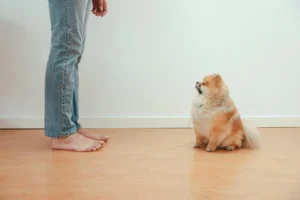
- Advanced Pomeranian Training: Beyond the Basics
- Why Advanced Training Works Perfectly for This Breed
- Building Bulletproof Attention and Focus
- Distraction Proofing in Real Environments
- Off-Leash Reliability and Emergency Recalls
- Complex Trick Chains and Behavior Sequences
- Backward Chaining for Complex Sequences
- Addressing Advanced Behavioral Challenges
- Impulse Control Exercises
- Competitive Obedience and Dog Sports
- Trick Dog Titles Through AKC
- Maintaining Motivation and Preventing Training Burnout
- Conclusion: The Lifelong Journey of Advanced Training
- Related Articles
- Frequently Asked Questions
- At what age can I start advanced training with my Pomeranian?
- How long does it take to train a reliable recall with a Pomeranian?
- Can Pomeranians really compete in dog sports despite their small size?
- Why does my Pomeranian perform tricks perfectly at home but not in public?
- How do I keep training sessions engaging when my Pomeranian gets bored easily?
Advanced Pomeranian Training: Beyond the Basics
Your Pomeranian just nailed “sit” for the third time in a row, tail wagging with smug satisfaction. The thing is, you both know she mastered that command six months ago. Now she’s eyeing you with a look that says, “Is that really all you’ve got?” These little dynamos crave mental stimulation, and once they’ve conquered basic obedience, they’re ready—no, demanding—something more challenging. Advanced training isn’t just about showing off at the dog park (though that’s a nice bonus). It’s about channeling that legendary Pomeranian intelligence and energy into behaviors that deepen your bond and keep that sharp mind engaged.
Why Advanced Training Works Perfectly for This Breed
Pomeranians descend from larger spitz-type sled dogs, which means they inherited serious working-dog genetics packed into a seven-pound frame. That heritage translates to surprising trainability when you tap into their motivation correctly. Unlike some toy breeds bred purely for companionship, these fluffballs actually want a job.
The catch? Their independent streak runs deep. A Pom will absolutely learn a complex behavior chain—but only if they see what’s in it for them. Traditional drill-style training bores them within minutes, and a bored Pomeranian becomes a creative problem-solver in ways you definitely don’t want. Advanced training leverages their natural curiosity and transforms that stubborn intelligence into focused partnership.
Size works to your advantage here, too. You can train intricate behaviors without worrying about a 70-pound dog accidentally knocking you over during the learning process. That said, never fall into the trap of thinking small dogs need less rigorous training. Your Pom is perfectly capable of the same precision work as any Border Collie—they just need methods scaled to their unique personality.
Building Bulletproof Attention and Focus
Before tackling complex behaviors, you need rock-solid attention. Most Poms have the focus span of a caffeinated hummingbird when something interesting appears. Squirrel? Leaf? Distant conversation? All infinitely more fascinating than you.
Start with the “watch me” command under zero distractions, then systematically add challenges. Hold a treat between your eyes and mark the exact moment your dog makes eye contact. Gradually increase the duration from one second to five, then ten. The goal is sustained focus, not just a glance.
Distraction Proofing in Real Environments
Take that attention work to a quiet park at 6 a.m. when foot traffic is minimal. Practice for two minutes, quit while you’re ahead, then go home. Next session, train at 7 a.m. when joggers appear. Then 8 a.m. with dogs in the distance. You’re building focus like you’d build muscle—progressive overload with adequate recovery.
The pivotal breakthrough happens when your Pom chooses to look at you despite a genuinely tempting distraction. That choice, repeated and reinforced, becomes the foundation for everything else. I’ve watched Pomeranians maintain eye contact while another dog played fetch ten feet away—not because they’re suppressing their nature, but because they’ve learned that checking in with their handler unlocks even better opportunities.
Off-Leash Reliability and Emergency Recalls
Off-leash training with a Pomeranian requires acknowledging a hard truth: prey drive is real, and your five-pound fluffball absolutely will chase that rabbit into traffic if given the chance. Emergency recalls aren’t optional—they’re life-saving.
Build your recall in layers. Start with a long line (15-30 feet) in a safely enclosed area. Use a distinct word you’ve never poisoned with overuse—not “come,” which you’ve probably said 10,000 times while your dog ignored you. Try “here,” “close,” or even an unusual sound like a whistle pattern.
- Call your dog when they’re already moving toward you, mark and reward heavily
- Call during mild distractions, reward with jackpot treats (three to five pieces in rapid succession)
- Practice recalls during play, interrupting something fun, then releasing back to play as the reward
- Introduce controlled distractions with a helper—another person, a stationary dog, scattered treats
- Never call your dog for something unpleasant; always walk over and collect them instead
The game-changer? Random reinforcement after your recall is solid. Sometimes reward with treats, sometimes with a favorite toy, sometimes with release back to sniffing. This unpredictability creates a dog who responds instantly because they genuinely don’t know what amazing thing might happen.
Test your recall in increasingly challenging scenarios, but always within a safely enclosed space until you’ve seen 100% compliance for at least three months. Even then, recognize that no recall is truly bulletproof. Environmental management—fenced yards, secure leashes in open areas—remains your primary safety net.
Complex Trick Chains and Behavior Sequences
Once your Pom has mastered individual tricks, chains transform them into impressive routines. This is where training becomes genuinely creative and deeply engaging for intelligent dogs.
Start by linking two known behaviors. If your dog knows “spin” and “bow,” ask for spin immediately followed by bow, then reward. Practice until the cue for the first behavior triggers both in sequence. Gradually add a third behavior, then a fourth.
Backward Chaining for Complex Sequences
Backward chaining—teaching the final behavior first, then adding earlier steps—works beautifully for intricate sequences. Suppose you want your Pom to fetch their leash, bring it to you, then sit. Teach the sit-and-hold first (with the leash already in mouth), then add the approach, finally add the initial fetch. Each session ends with the part your dog knows best, building confidence.
Pomeranians excel at tricks that showcase their natural agility and precision. Weaving through your legs while you walk, jumping through your arms, walking backward, and balancing on hind legs all play to their strengths. The mental workout from learning these behaviors burns more energy than a 30-minute walk.
One particularly engaging chain: teach your Pom to “clean up” by putting toys in a basket, then “close” the lid, then come find you and “tell me” by speaking. This 60-second sequence requires discrimination (which items are toys), motor planning (how to grip and carry), and memory (the full sequence). Dogs who master complex chains show remarkable problem-solving in other areas of life.
Addressing Advanced Behavioral Challenges
That signature Pomeranian alertness becomes problem barking when unchecked. Advanced training doesn’t suppress natural behaviors—it channels them appropriately.
Teach a “quiet” command, but only after acknowledging your dog’s alert. When your Pom barks at the doorbell, say “thank you” (genuinely), wait for a pause—even half a second—then mark and reward silence. Gradually extend the silence duration. You’re not eliminating the guardian instinct; you’re putting it on a dimmer switch you control.
Impulse Control Exercises
Pomeranians often struggle with impulse control around exciting stimuli. “Leave it” is basic; advanced impulse control means your dog can walk past dropped food, remain calm when other dogs approach, and settle on command even when aroused.
Practice “It’s your choice” games: hold treats in your open palm. Any movement toward your hand makes it close. Only calm waiting opens your hand. This transfers to real-world scenarios remarkably well. Your Pom learns that self-control—not demanding behavior—makes good things appear.
Work up to having your dog hold a sit-stay while you bounce a tennis ball, or maintain a down-stay while you prepare their meal. These exercises build the kind of self-regulation that prevents leash reactivity, door-dashing, and demand barking. A Pomeranian with strong impulse control is a genuinely peaceful household companion despite their naturally excitable temperament.
Competitive Obedience and Dog Sports
Pomeranians compete successfully in rally obedience, agility, and trick dog titling. These structured programs provide clear training goals and validation that your methods are working.
Rally obedience involves navigating a course with signs indicating specific behaviors—left turn, right turn, spiral, call front, and dozens more. It’s less rigid than traditional obedience, allowing verbal encouragement throughout. Pomeranians often excel here because the varying exercises maintain their interest.
For agility, start with foundation work on flat ground before introducing equipment. Teaching your Pom to target (touch their nose to your hand or a target stick) transfers directly to obstacle training. Their small size means you’ll modify jump heights and tunnel entries, but their speed and enthusiasm rival any working breed.
Trick Dog Titles Through AKC
The AKC’s Trick Dog program offers progressive titles from Novice to Elite Performer. Novice requires just ten tricks from a list including basics like shake, roll over, and jump over a bar. Advanced levels demand behaviors like backing up ten feet, retrieving specific named objects, or playing dead until released.
These titles provide structure for training sessions and tangible goals. More importantly, the variety prevents training burnout. When your Pom gets frustrated with precision heeling, switch to teaching them to fetch tissues from a box. Different cognitive challenges keep both of you engaged.
Maintaining Motivation and Preventing Training Burnout
Even the most food-motivated Pomeranian will check out if training becomes predictable drudgery. Keep sessions short—five to ten minutes maximum. If you’re drilling the same behavior for the eighth repetition and seeing degrading performance, you’ve already trained too long.
Vary your rewards strategically. High-value treats (real chicken, cheese, freeze-dried liver) come out for new behaviors or challenging distractions. Mid-value treats (regular training treats) reinforce known behaviors. Occasional jackpots—an entire handful of treats delivered rapid-fire—create unpredictability that maintains enthusiasm.
But don’t rely solely on food. Pomeranians respond brilliantly to toy rewards, especially tug sessions with a small fleece toy. Personal play—a quick game of chase or gentle wrestling—can be more motivating than any treat. The key is discovering what your individual dog values most, then deploying it strategically.
Watch for stress signals: yawning, sniffing the ground, looking away, or sudden scratching. These indicate your dog is overwhelmed or frustrated. End the session immediately with an easy behavior they know well, reward, and quit. Pushing through stress destroys trust and progress.
Conclusion: The Lifelong Journey of Advanced Training
Advanced Pomeranian training isn’t a destination—it’s an evolving conversation between you and a remarkably intelligent partner. These techniques challenge your dog mentally in ways that physical exercise alone never can, resulting in a calmer, more focused, and deeply bonded companion. The skills you build together—attention, impulse control, complex problem-solving—generalize far beyond trick performance into everyday life.
Start with one new behavior this week. Maybe it’s two minutes of focused attention work, or the first step of a recall refresh, or teaching your Pom to find a hidden toy by name. Small, consistent sessions compound into extraordinary results. Your fluffy little genius is ready for the challenge. The only question is whether you’re ready to keep up.
Related Articles
- Advanced Training for Great Pyrenees: Master Their Independence
- Advanced Shih Tzu Training: Beyond the Basics
- Advanced Rottweiler Training: Build an Unshakeable Bond
Frequently Asked Questions
At what age can I start advanced training with my Pomeranian?
You can begin foundational work for advanced behaviors as early as four to five months, once basic obedience is solid. However, complex chains and high-distraction training work better after your Pom reaches adolescence (around 12 months) and their focus naturally improves. Always prioritize building drive and enthusiasm over precision in young dogs.
How long does it take to train a reliable recall with a Pomeranian?
Expect three to six months of consistent practice to achieve reliable recall in moderately distracting environments. Emergency-level recalls where your dog responds despite high prey drive or fear take longer—often 12 to 18 months of layered training. The timeline depends heavily on your consistency, the quality of your rewards, and your individual dog’s temperament.
Can Pomeranians really compete in dog sports despite their small size?
Absolutely. Pomeranians regularly earn titles in rally obedience, agility (in the 8-inch jump height class), trick dog competitions, and even scent work. Their intelligence, trainability, and enthusiasm make them surprisingly competitive. You’ll need to modify some equipment for their size, but their capabilities match much larger breeds.
Why does my Pomeranian perform tricks perfectly at home but not in public?
This is classic generalization failure. Dogs don’t automatically transfer learned behaviors to new environments. You need to retrain each behavior in multiple locations with gradually increasing distractions. Start in your yard, then a quiet street, then a calm park, systematically building up environmental challenges while maintaining high reward value.
How do I keep training sessions engaging when my Pomeranian gets bored easily?
Keep sessions under ten minutes, end on a success, and vary the behaviors you practice within a single session. Rotate between tricks, obedience work, and games. Change training locations frequently—kitchen, living room, backyard, driveway. Use different reward types (treats, toys, play) unpredictably. If your dog shows disinterest, you’re either drilling too long or the rewards aren’t valuable enough.