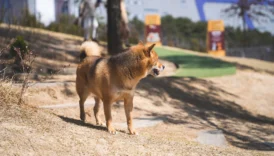
Advanced Training for Your Shar Pei: Expert Techniques
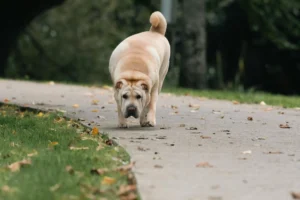
- Advanced Training for Your Shar Pei: Expert Techniques
- Understanding the Shar Pei Mindset Before You Train
- Building Bulletproof Focus in High-Distraction Environments
- The Attention Foundation Exercise
- Advanced Impulse Control Beyond Basic Stays
- Boundary Training for Natural Guarders
- Socialization Maintenance and Controlled Exposure Work
- Teaching Complex Behavior Chains and Problem-Solving Skills
- Scent Work and Nose Games
- Addressing Breed-Specific Training Challenges
- Maintaining Skills and Preventing Backsliding
- Bringing It All Together: Your Advanced Shar Pei Partnership
- Related Articles
- Frequently Asked Questions
- At what age should I start advanced training with my Shar Pei?
- Why does my Shar Pei perform perfectly at home but ignore commands in public?
- How do I motivate a Shar Pei who doesn't seem food or toy motivated?
- Can Shar Peis ever be trusted off-leash?
- How long does it take to see results from advanced training?
Advanced Training for Your Shar Pei: Expert Techniques That Actually Work
Your Shar Pei sits across the room, looking directly at you with those deep-set eyes. You call her name—nothing. You try the recall command you’ve practiced a hundred times—she yawns and turns her head toward the window. It’s not that she doesn’t know what you want. She’s just deciding whether your request aligns with her own agenda. If you’ve owned a shar pei for more than a week, you know exactly this moment. They’re brilliant dogs with the independent streak of a cat and the stubbornness of, well, a two-thousand-year-old Chinese guardian breed that’s survived this long by trusting their own judgment.
Advanced training with this breed isn’t about teaching tricks to impress your neighbors. It’s about building a partnership where your dog chooses to work with you even when distractions are high, impulses are strong, and their natural guarding instincts kick in. The techniques that work beautifully with eager-to-please Labrador Retrievers often fall flat with these wrinkled thinkers. You’ll need a different approach—one that respects their intelligence while establishing you as someone worth listening to.
Understanding the Shar Pei Mindset Before You Train
Before you attempt any advanced work, you need to grasp what’s happening behind those hippopotamus wrinkles. Shar Peis were bred to guard homesteads, hunt wild boar, and fight in pits (a dark chapter we don’t celebrate, but it explains their pain tolerance and tenacity). This heritage means they’re genetically wired to make independent decisions, assess threats without your input, and tolerate discomfort without flinching. These traits make them exceptional watchdogs and incredibly challenging students.
Their learning style differs fundamentally from herding or sporting breeds. A Border Collie lives for your approval and will repeat behaviors just to see you smile. Your Shar Pei? She’s asking “what’s in it for me?” with every request. This isn’t defiance in the bratty sense—it’s cost-benefit analysis. They learn quickly (usually within three to five repetitions), but retention depends entirely on whether they found the exercise worthwhile. I’ve watched Shar Peis nail a complex behavior chain on day one, then act like they’ve never heard the cue on day two because the reward wasn’t compelling enough.
Most importantly, these dogs have a dignity that demands respect. Harsh corrections, alpha rolls, or intimidation tactics don’t just fail—they damage the trust you’ll need for advanced work. A Shar Pei who feels disrespected will shut down completely or, worse, decide you’re a threat worth challenging.
Building Bulletproof Focus in High-Distraction Environments
The foundation of all advanced training is attention. Your dog can’t perform a complex retrieve or hold a stay through chaos if she can’t focus on you first. With Shar Peis, you’re competing against their natural vigilance—they’re scanning for threats, monitoring household activity, and tracking every sound.
Start by making eye contact worth their while. Choose a reward your dog finds genuinely exciting (and this might not be what you think). I’ve worked with Shar Peis who ignore chicken but lose their minds for freeze-dried beef lung, and others who’d rather have a quick game of tug than any food. Experiment with five different high-value rewards and note which one makes your dog’s eyes brighten.
The Attention Foundation Exercise
Begin in your quietest room. Say your dog’s name once—just once. The instant her eyes meet yours, mark it (with a clicker or the word “yes”) and deliver that premium reward. Don’t wait for a long stare; even a flicker of eye contact counts initially. Practice this in five-minute sessions, three times daily for one week. Most Shar Peis will start offering eye contact automatically within four to six days.
Now gradually increase difficulty. Practice in the hallway, then the kitchen during meal prep, then the front yard with moderate street noise. If your dog can’t perform the behavior at the new level, you’ve jumped too far—drop back one step. This isn’t linear progress; some days require easier settings than others, especially if something has triggered their guarding instincts earlier.
Advanced Impulse Control Beyond Basic Stays
A solid stay is intermediate work. Advanced impulse control means your Shar Pei can control herself when every instinct screams to react—when the doorbell rings, when another dog approaches, when a squirrel bolts across the path three feet away. This level of self-control doesn’t develop from drilling longer down-stays. It comes from building what trainers call “default behaviors” and teaching your dog that choosing restraint pays better than giving in to impulse.
The relaxation protocol is your secret weapon here. Developed by Dr. Karen Overall, this systematic program teaches dogs to remain calm during increasingly chaotic scenarios. You’ll need a mat or bed, your rewards, and a timer. The protocol gives specific instructions: sit on the mat while I stand up, sit while I walk five steps away, sit while I clap once, sit while I jog in place for ten seconds. It sounds deceptively simple, but by day fifteen, you’re asking your dog to hold position while you do jumping jacks, bounce a ball, and open and close the front door—all in rapid succession.
Shar Peis often struggle around days ten through twelve when distractions layer quickly. Break those sessions into smaller chunks if needed. The goal isn’t perfection; it’s building your dog’s capacity to think through arousal instead of simply reacting. When you can run this protocol with real-world distractions (have a family member walk past with the cat, or play doorbell sounds), you’ve created impulse control that transfers to actual situations.
Boundary Training for Natural Guarders
Teaching a “place” command takes impulse control further. Your Shar Pei learns that her designated spot (a raised bed works best because the boundary is obvious) is where she goes during high-arousal situations—guests arriving, delivery trucks rumbling past, the neighbor’s dog barking. This isn’t punishment; it’s giving her a job that satisfies her guarding instinct while keeping behavior appropriate.
Start by heavily rewarding any interaction with the bed. Toss treats onto it randomly throughout the day. Once she’s checking it regularly, add your cue (“place” or “bed”) right before she steps on it. Gradually increase the duration she stays there, building from three seconds to thirty seconds to three minutes. Then introduce mild distractions—drop a toy nearby, have someone walk past, ring a doorbell app on low volume. Each time she holds position, she earns high-value rewards delivered directly to the bed.
Socialization Maintenance and Controlled Exposure Work
Adult Shar Peis need ongoing socialization, but not the puppy-class variety. Advanced social training means your dog can remain neutral and under control around triggers that naturally concern them: unfamiliar dogs, strangers approaching, sudden environmental changes. This breed can develop reactivity seemingly overnight, especially between eighteen months and three years when maturity solidifies their guarding instincts.
Forget the dog park. Controlled exposure means intentionally setting up scenarios at distances and intensity levels where your dog can succeed. If your Shar Pei tenses at forty feet from an unfamiliar dog, you work at fifty feet—just below threshold. At this distance, you can practice attention, simple obedience, or even tricks. The other dog becomes background noise, not a threat requiring reaction.
Use this protocol for systematic desensitization:
- Identify your dog’s threshold distance for each trigger (other dogs, strangers, bicycles, etc.)
- Work ten feet beyond that threshold where she notices but doesn’t react
- Practice high-value behaviors for thirty-second sessions
- End before arousal builds; multiple short successes beat one long stressful session
- Very gradually decrease distance over weeks, not days—two feet closer per week is ambitious
- If she reacts, you’re too close; increase distance immediately and note the setback
Track your progress in a notebook. Write down distances, your dog’s body language (loose vs. tense, soft vs. hard eye contact), and how many successful repetitions you achieved. This data reveals patterns—maybe mornings work better than evenings, or perhaps she’s more reactive on days you’ve skipped exercise.
Teaching Complex Behavior Chains and Problem-Solving Skills
Here’s where advanced training gets genuinely interesting. Behavior chains are sequences where completing one action cues the next: retrieve the dumbbell, return to heel position, sit, release the dumbbell into your hand, return to heel. Shar Peis excel at this type of work because it engages their problem-solving abilities and provides clear structure.
Start by training each component separately until it’s fluent—your dog performs it immediately and correctly ninety percent of the time. Then begin linking them backward (this is called back-chaining). Teach the final behavior first, add the second-to-last behavior, and so on. Using the retrieve example, you’d polish the release, then add the sit before the release, then add returning to heel before sitting, and finally add the actual retrieve.
Why backward? Because the behavior closest to the reward becomes the strongest, and every action becomes a cue for the next familiar step. Your dog gains momentum through the chain instead of losing enthusiasm as she goes.
Scent Work and Nose Games
Shar Peis have strong hunting backgrounds and solid noses. Scent detection gives them mental stimulation that physical exercise can’t match. Start with simple nosework: let your dog watch you hide a treat under one of three plastic containers, then release her to find it. Most dogs get this within two tries. Make it harder—more containers, hidden while she’s out of the room, placed at different heights, or containing stronger distractions nearby.
Progress to specific scent detection using essential oils (birch, anise, and clove are standard). Place a cotton swab with one drop of oil in a small tin, and pair that scent with treats for five days—she just gets rewarded near the scent. Then hide the tin in easy locations and reward when she indicates interest (sniffing, pawing, staring). This taps into natural ability while teaching her that using her brain to solve puzzles is the best game available.
Addressing Breed-Specific Training Challenges
Even with perfect technique, you’ll hit roadblocks unique to these dogs. Their pain tolerance means they might not react to correction-based training the way other breeds do, making positive reinforcement not just kinder but actually more effective. I’ve seen Shar Peis completely ignore prong collar corrections that would stop a German Shepherd immediately, then respond instantly to the possibility of a ball being thrown.
Boredom is another saboteur. These dogs need variety. Running the same obedience routine daily turns training into white noise they’ll tune out. Rotate between obedience work, scent games, problem-solving toys, and trick training. Monday might focus on heeling precision, Wednesday on finding hidden objects, Friday on learning to close cabinet doors on cue. This variety keeps their intelligent minds engaged.
Their social selectivity requires special handling. Many Shar Peis bond intensely with their family but remain suspicious of everyone else. This isn’t shyness you can train away—it’s temperament. Advanced training should include a solid “neutral” behavior where your dog learns to ignore strangers politely rather than forcing interactions she doesn’t want. Teach a default sit-stay when people approach, reward heavily for calm (not friendly, just calm) behavior, and let her keep her dignity intact by not requiring she accept petting from strangers.
Maintaining Skills and Preventing Backsliding
Here’s the truth about advanced training that nobody mentions enough: it requires maintenance forever. A Shar Pei who hasn’t practiced impulse control exercises in three months will absolutely lose those skills. Their independent nature means they’ll default to self-directed behavior if you stop reinforcing your partnership.
Set up a sustainable practice schedule. Five minutes daily beats hour-long sessions on weekends. Incorporate training into regular life—practice attention while waiting for meals, impulse control at doorways, recalls between rooms. These micro-sessions add up to hundreds of repetitions monthly without feeling like formal training.
Periodically test skills under new conditions. If you’ve trained reliable downs in your living room, try the park. If your dog holds stays during normal household activity, what happens during a dinner party? These proofing sessions reveal gaps before they become problems. When you find weak spots (and you will), drop back to easier versions temporarily and rebuild from there.
Reward generously when your dog offers trained behaviors without being asked. If she automatically sits at the curb or goes to her place when guests arrive, that’s gold-star behavior worth five treats, not just one. These spontaneous choices show the training has become part of how she thinks, not just tricks she performs for cookies.
Bringing It All Together: Your Advanced Shar Pei Partnership
Advanced training with your Shar Pei isn’t about achieving perfect obedience robot behavior. These dogs will never be Golden Retrievers, eagerly awaiting your every command with wiggling enthusiasm. Instead, you’re building something arguably more valuable—a partnership with a thinking, independent dog who chooses cooperation because you’ve made it worthwhile, kept it interesting, and respected her fundamental nature.
The work demands consistency, creativity, and patience measured in months, not weeks. You’ll have sessions where everything clicks, and days where it feels like you’ve trained a completely different dog who’s forgotten her own name. That’s normal with this breed. What matters is the trajectory over time—are you seeing gradual improvement across weeks? Are previously difficult situations becoming manageable? Is your dog checking in with you more often, even in distracting environments?
Keep challenging both yourself and your dog. Once you’ve mastered the foundations here, consider advanced sports like rally obedience (which rewards precision but allows handler talking), barn hunt (taps into prey drive safely), or therapy dog work (if your individual dog has the temperament). The mental stimulation of learning something new keeps these intelligent dogs engaged and deepens the working relationship you’ve built.
Most importantly, celebrate the small victories. The moment your shar pei glances at you for permission before investigating a sound. The walk where she stayed focused despite three dogs passing. The dinner party where she held her place command for forty-five minutes. These aren’t Instagram-worthy tricks, but they’re the real markers of an exceptionally well-trained guardian breed living successfully in the modern world.
Related Articles
- Advanced Training for Great Pyrenees: Master Their Independence
- Anatolian Shepherd Advanced Training: A Complete Guide
- Advanced Training for Great Danes: Building a Gentle Giant
- Advanced Training Strategies for Different Dog Breeds
- Advanced Training Techniques for Your Cocker Spaniel
Frequently Asked Questions
At what age should I start advanced training with my Shar Pei?
You can begin introducing advanced concepts around twelve to fourteen months, once basic obedience is solid and your dog’s attention span has matured. However, many Shar Peis don’t mentally settle until eighteen to twenty-four months, so be patient if progress feels slow during adolescence. The key is building on a foundation of basic skills—don’t skip to advanced work if recalls and stays aren’t reliable yet.
Why does my Shar Pei perform perfectly at home but ignore commands in public?
This is classic lack of generalization, which is especially pronounced in this breed. Shar Peis don’t automatically assume that “sit” in the kitchen means the same thing as “sit” at the park. You must specifically train each behavior in multiple environments, gradually increasing distractions. Start with low-distraction public spaces like empty parking lots before attempting high-traffic areas, and expect to rebuild skills from scratch in each new location initially.
How do I motivate a Shar Pei who doesn’t seem food or toy motivated?
First, ensure you’re training when your dog is actually hungry—try sessions before meals rather than after. Experiment with unusual high-value rewards like freeze-dried salmon, real meat, or cheese rather than standard training treats. Some Shar Peis respond better to life rewards—access to sniffing areas, permission to greet another dog, or being released to explore. Watch what your dog chooses to do when free, then use access to those activities as reinforcement.
Can Shar Peis ever be trusted off-leash?
This varies tremendously by individual dog, but most Shar Peis have moderate to low recall reliability off-leash due to their independent nature and prey drive. You can achieve excellent off-leash control in secure, familiar areas with extensive training, but many owners find long-lines (fifteen to thirty feet) work better for providing freedom while maintaining safety. Never trust off-leash recalls near roads or unfenced areas until you’ve tested reliability in hundreds of scenarios over multiple years.
How long does it take to see results from advanced training?
Expect to practice new skills for three to six weeks before they become reliable, and two to three months before they’re solid under moderate distraction. Complex behavior chains might take four to six months to perfect. Shar Peis learn the mechanics quickly but need extensive repetition to choose performing the behavior consistently. Unlike eager-to-please breeds that generalize quickly, these dogs require patience and shouldn’t be rushed through training levels just because they seem to understand the concept.