Shiba Inu Shiba Inu Shiba Inu: Advanced Training Guide
- Shiba Inu Shiba Inu Shiba Inu: Advanced Training Guide
- Understanding the Shiba Mindset Before Advanced Work
- Building Bulletproof Recalls with High-Drive Dogs
- The Three-Distance Drill
- Advanced Obedience: Chaining Complex Behaviors
- Adding Distance and Distractions
- Impulse Control Games That Actually Work
- Channeling Prey Drive into Productive Work
- Off-Leash Training in Controlled Environments
- Maintaining Motivation Through Training Plateaus
- Proofing Behaviors in Real-World Scenarios
- Wrapping Up Your Shiba Inu's Advanced Training Journey
- Related Articles
- Frequently Asked Questions
- Can Shiba Inus ever be trusted off-leash?
- How long does it take to teach a Shiba advanced obedience commands?
- Why does my Shiba ignore commands they clearly know?
- What's the best age to start advanced training with a Shiba?
- Do Shibas need different training methods than other breeds?
Shiba Inu Shiba Inu Shiba Inu: Mastering Advanced Training Techniques
Your Shiba just looked directly at you, processed your recall command with what can only be described as careful consideration, and trotted off in the opposite direction. You’re standing there with treats in hand, wondering if your dog’s selective hearing is actually a sign of genius-level intelligence or just plain stubbornness. Here’s the truth: training a shiba inu shiba inu shiba inu to advanced levels isn’t about breaking their spirit—it’s about becoming more interesting than whatever else has caught their attention.
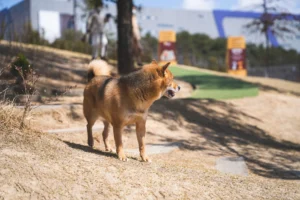
Advanced training with this ancient Japanese breed demands a completely different mindset than what works for Labs or Border Collies. These fox-like dogs were bred to hunt independently in mountainous terrain, making split-second decisions without human input. That’s not a bug in their programming; it’s the main feature. And once you understand how to work with that drive instead of against it, you’ll unlock training potential most Shiba owners never imagine possible.
Understanding the Shiba Mindset Before Advanced Work
Before you attempt any advanced training, you need to accept something fundamental: your Shiba will never worship you the way a Golden Retriever does. They’re measuring every interaction through a cost-benefit analysis that would impress a Wall Street trader. When your Shiba sits on command, they’re not trying to please you—they’ve simply calculated that the reward outweighs the effort of maintaining their current position.
This transactional relationship actually becomes your advantage in advanced training. Once a Shiba understands that complex behaviors earn better rewards, they’ll engage with training that would bore other breeds to tears. I’ve watched Shibas master three-step scent discrimination tasks in half the time it took sporting breeds, simply because the mental challenge itself became rewarding.
The primitive nature of these dogs means their prey drive sits closer to the surface than most modern breeds. That squirrel isn’t just interesting—it triggers ancient hunting instincts that flood their brain with dopamine. Your job isn’t to eliminate this drive but to redirect it. The same laser focus they’ll use to stalk a bird can be channeled into tracking work, nose games, or advanced obedience that requires intense concentration.
Building Bulletproof Recalls with High-Drive Dogs
Let’s address the elephant in the room: off-leash reliability with Shibas. Most trainers will tell you it’s impossible. They’re mostly right, but mostly isn’t always. I’ve known three Shibas with genuinely reliable recalls, and each one followed the same training protocol that took between eight and fourteen months to cement.
Start by completely retraining your recall word. If you’ve been shouting “come!” while your Shiba ignores you, that word is poisoned. Pick something new—I like “close” or “here”—and never, ever use it unless you can enforce it. For the first two months, you’ll only practice this command on a 30-foot long line in a controlled environment.
The training sequence looks like this: Call your new recall word once while your Shiba is mildly distracted (sniffing, looking around, but not locked onto prey). The instant they glance at you, mark it with “yes!” and produce something extraordinary. Not regular treats. We’re talking fresh chicken, cheese, or whatever makes your particular Shiba lose their mind. Run backward as they approach to trigger chase drive, then party like they just won Westminster when they reach you.
The Three-Distance Drill
Once your Shiba responds reliably at 10 feet with mild distractions, you’ll implement the three-distance drill. Practice recalls at 10 feet, 20 feet, and 30 feet in the same session, randomizing the order. This prevents them from predicting the pattern and checking out mentally. Each successful recall earns a jackpot reward—three to five pieces of high-value food plus enthusiastic praise.
The mistake most owners make is progressing to higher distractions too quickly. Your Shiba needs 50 to 80 successful repetitions at each distraction level before moving up. Yes, that means weeks of work before you’re practicing near other dogs or wildlife. But rushing this process is why so many Shibas end up on leashes for life.
Advanced Obedience: Chaining Complex Behaviors
Shibas excel at behavior chains once they understand the game. A behavior chain links multiple commands into a sequence, with the final reward coming only after completion of all steps. This actually appeals to their problem-solving nature—they’re figuring out a puzzle rather than just performing rote obedience.
Start with a simple two-step chain: “sit” followed immediately by “down.” Mark and reward only after both behaviors complete. Your Shiba will initially get frustrated—they’re accustomed to getting paid after each command. Push through this extinction burst, which typically lasts three to five sessions. Once they grasp that the sequence itself is the behavior, you can add a third element.
A practical advanced chain might look like this: go to your bed, lie down, wait for 30 seconds, then come when called. This four-part sequence requires impulse control, duration, and recall—three skills that directly counter the Shiba’s natural inclinations. Build it in reverse, training the final behavior first (coming off the bed) and gradually adding earlier steps.
Adding Distance and Distractions
The real test comes when you practice these chains with environmental pressure. Can your Shiba complete a four-step sequence when another dog walks by? When a leaf skitters across the floor? When someone rings the doorbell? These are the scenarios where behavior chains prove their worth in daily life.
Introduce distractions systematically, starting at a level where your dog succeeds 80% of the time. If they fail twice consecutively, you’ve jumped too far too fast. Drop back to the previous distraction level and build more repetitions before advancing again.
Impulse Control Games That Actually Work
The “wait” command transforms Shiba ownership from a constant wrestling match into something resembling partnership. Unlike “stay,” which implies you’re leaving, “wait” means “freeze until I release you, even while I’m right here tempting you with everything you want.”
Teaching wait requires perfect timing and absolutely zero negotiation. Place a treat on the ground while your Shiba is in a sit. Your hand hovers over it as you say “wait.” The nanosecond they lean toward it, your hand covers the treat completely. No words, no corrections, just consequence. When they rock back into position, your hand lifts. Repeat this fifty times in your first session.
Most Shibas crack this initial level within two sessions. Then you’ll progressively increase difficulty:
- Stand up straight instead of hovering over the treat (adds 2-3 sessions)
- Take one step backward, creating distance (another 3-4 sessions)
- Place multiple treats while they wait (this is where it gets interesting)
- Toss a treat past them and have them wait while it rolls by (peak difficulty)
- Practice at doorways, with you standing on the other side of an open door
That final application—waiting at doorways—eliminates the door-bolting behavior that gets so many Shibas killed. A solid wait means you can open your front door to grab a package while your dog holds position three feet back, waiting for their release word.
Channeling Prey Drive into Productive Work
Fighting your Shiba’s prey drive is like fighting gravity. Instead, redirect that intense focus toward activities that satisfy their hunting instincts without the neighborhood cat population paying the price. Nosework and scent discrimination tap directly into those predatory sequences—searching, tracking, and finding—while keeping everything under your control.
Start with simple scent games using boxes. Place a high-value treat in one of three boxes, let your Shiba search, and mark the moment they indicate the correct box (usually by pawing, nosing, or staring intently). Within two weeks of daily five-minute sessions, most Shibas can discriminate between six to eight boxes. The searching behavior itself becomes reinforcing because it mimics hunting.
Barn hunt is another outlet that Shibas naturally excel at. They’re crawling through hay bales, using their nose to locate hidden tubes containing live rats (safely contained, obviously). It’s weird, it’s quirky, and it gives your dog a legal way to express those vermin-hunting instincts bred into them for generations. Many Shiba owners report that their dogs sleep like logs after barn hunt sessions—that deep, satisfied sleep that only comes after fulfilling work.
Off-Leash Training in Controlled Environments
Let me be crystal clear: I’m not suggesting you let your Shiba run free at the unfenced dog park. But controlled off-leash work in secure areas builds confidence and responsiveness that translates to better behavior even when they’re on leash.
A fenced baseball field, tennis court, or friend’s secure yard provides the perfect training ground. Your Shiba gets to experience freedom while you maintain ultimate control over the environment. During these sessions, practice everything with the long line dragging (never hold it—just let it trail as insurance).
The goal is teaching your dog that staying within a certain radius of you provides access to rewards, while distance creates disappointment. Every time they check in with you voluntarily—a glance, a few steps closer, actual approach—mark and reward it. You’re building a reinforcement history around proximity.
After 30 to 40 sessions in the controlled environment, you’ll notice something shift. Your Shiba will start orbiting you rather than bolting to the farthest point possible. They’ll check in every 20 to 30 seconds without prompting. This is when you know the training is taking root, though you’re still months away from considering any truly off-leash work in unfenced areas.
Maintaining Motivation Through Training Plateaus
Somewhere around month four of advanced training, many Shibas hit a wall. The novelty has worn off, they’ve figured out your patterns, and suddenly behaviors that were solid start falling apart. This plateau frustrates owners into either pushing harder (which backfires) or giving up entirely.
The solution is variable reinforcement combined with strategic breaks. Instead of rewarding every successful behavior, switch to a random schedule where they might get paid after the first repetition, then the fifth, then the second, then the eighth. This unpredictability actually increases motivation—it’s the same psychology that makes slot machines addictive.
Simultaneously, reduce training frequency. If you’ve been doing 15-minute sessions daily, drop to 10 minutes every other day. Shibas are smart enough that they don’t need constant drilling once they understand a behavior. The reduced frequency often sharpens their performance because each session feels fresh rather than routine.
Also, rotate your reward types. High-value treats work for acquisition, but maintaining behaviors requires variety. Sometimes they get food. Sometimes it’s a quick game of tug. Sometimes you release them to go sniff that interesting spot they’ve been eyeing. Life rewards become more powerful than food once the foundation is solid.
Proofing Behaviors in Real-World Scenarios
Training that only works in your living room isn’t really training—it’s just a parlor trick. Proofing means your Shiba will perform behaviors regardless of location, distraction level, or their internal state. This is where months of foundation work either pays off or falls apart.
Create a proofing checklist of real situations where you need reliability: the vet’s office, outdoor cafes, hiking trails, friend’s houses with other pets, busy sidewalks. Practice each behavior in each location, starting at low-distraction times (empty vet lobby on a quiet afternoon) before progressing to peak chaos (Saturday morning at the dog park entrance).
Your Shiba might sit perfectly at home but act like they’ve never heard the word when you’re standing outside the pet store. That’s normal. You’re essentially teaching the behavior fresh in each new context. Budget 10 to 15 repetitions in any new location before expecting fluency.
The breakthrough comes when generalization clicks—usually after you’ve proofed in eight to twelve different environments. Suddenly your dog understands that “sit” means the same thing everywhere, and new locations require only two or three repetitions before they’re performing reliably.
Wrapping Up Your Shiba Inu’s Advanced Training Journey
Training a shiba inu shiba inu shiba inu to advanced levels won’t happen in six weeks or even six months. You’re looking at a year-plus commitment for solid off-leash recalls and truly reliable complex behaviors. But here’s what nobody tells you: the training itself becomes the relationship.
Those hundreds of repetitions, the problem-solving sessions, the moments where something finally clicks—that’s where you build real partnership with a breed that doesn’t give their trust freely. Your Shiba won’t transform into a biddable golden retriever, and you shouldn’t want them to. They’ll remain independent, occasionally selective, and prone to evaluating whether your command makes sense in the current context.
But they’ll also recall away from squirrels (most of the time), hold complex behavior chains under distraction, and demonstrate impulse control that surprises everyone who knows the breed’s reputation. Start with one skill from this guide—maybe that bulletproof wait at doorways or the three-distance recall drill. Give it sixty days of consistent practice, and you’ll see what your Shiba is actually capable of when the training respects their nature instead of fighting against it.
Related Articles
- Advanced Training for Great Pyrenees: Master Their Independence
- Anatolian Shepherd Advanced Training: A Complete Guide
- Advanced Training for Great Danes: Building a Gentle Giant
- Advanced Training Strategies for Different Dog Breeds
- Advanced Training Techniques for Your Cocker Spaniel
Frequently Asked Questions
Can Shiba Inus ever be trusted off-leash?
A small percentage of Shibas can achieve off-leash reliability, but it requires 12-18 months of intensive recall training and an individual dog with lower-than-average prey drive. Even then, most trainers recommend keeping them leashed in unfenced areas due to their independent nature and strong hunting instincts. The risk of them bolting after wildlife or simply deciding to explore on their own terms remains high enough that it’s rarely worth the gamble.
How long does it take to teach a Shiba advanced obedience commands?
Most Shibas can learn the mechanics of an advanced behavior in 5-10 sessions, but achieving reliability under distraction takes 8-12 weeks per skill. Behavior chains and complex sequences require an additional 4-6 weeks once the individual components are solid. The breed’s intelligence means they learn quickly, but their independent nature means you’ll spend more time on proofing and generalization than with more biddable breeds.
Why does my Shiba ignore commands they clearly know?
Shibas perform a cost-benefit analysis before complying with any command. If the environmental distraction or their current activity is more rewarding than your treat or praise, they’ll simply opt out. This isn’t dominance or spite—it’s how their brain is wired after centuries of independent hunting. The solution is making compliance more rewarding than the alternative and using variable reinforcement to maintain unpredictability in rewards.
What’s the best age to start advanced training with a Shiba?
You can begin foundation work for advanced training as early as 12-16 weeks, but most Shibas aren’t mentally mature enough for complex behavior chains until 10-14 months old. Their adolescent phase (typically 6-18 months) often brings regression in basic obedience, so pushing advanced skills during this period usually backfires. Many trainers find the sweet spot is around 18-24 months when the dog has matured but isn’t yet set in their ways.
Do Shibas need different training methods than other breeds?
Shibas respond best to training methods that emphasize choice and consequence rather than compliance and submission. Heavy-handed corrections typically shut them down or trigger stubborn resistance, while purely positive methods sometimes lack the structure they need. The most effective approach combines clear boundaries with high-value rewards, allowing the dog to “choose” correct behaviors because they’ve learned those choices produce the best outcomes.