Training Big Dogs Big: Advanced Techniques That Work
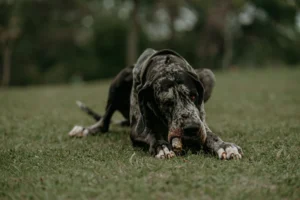
- Training Big Dogs Big: Advanced Techniques That Work
- The Foundation: Impulse Control Before Everything Else
- Leash Work That Actually Accounts for Physics
- Equipment Choices That Give You Mechanical Advantage
- Distance Control and Emergency Recalls
- Increasing Difficulty Gradually
- Teaching Spatial Awareness and Body Control
- Managing Arousal and Excitement Levels
- The Relaxation Protocol
- Strength Training and Physical Conditioning
- Conclusion: Building a Responsive Giant
- Related Articles
- Frequently Asked Questions
- At what age should I start advanced training with my large breed puppy?
- Can I train a big dog without using any corrections or aversives?
- How long does it take to get reliable off-leash control with a 100+ pound dog?
- My large dog is already three years old with no training—is it too late?
- Should I hire a professional trainer for my giant breed, or can I do this myself?
Training Big Dogs Big: Advanced Techniques That Work
Your Great Dane lunges toward another dog at the park, and suddenly you’re water-skiing across the grass on your stomach. Your Mastiff decides the sofa looks comfortable, and now you’ve got 180 pounds of immovable dog blocking Netflix. These aren’t just inconveniences—when you’re working with big dogs big enough to outweigh many adult humans, training gaps become safety issues fast.
I’ve watched owners struggle with giant breeds for years, often making the same mistake: they assume bigger dogs just need stronger corrections or heavier equipment. Wrong. Advanced training for massive breeds requires understanding leverage, body mechanics, impulse control at scale, and how to build reliable off-leash responsiveness when your dog could drag a small car if they wanted to.
The good news? Large and giant breeds often have temperaments that make them exceptional students once you apply the right techniques. They’re typically less reactive than small terriers, more food-motivated than many working breeds, and genuinely eager to understand what you want. You just need methods that account for their size, strength, and the physical reality that you cannot muscle them into compliance.
The Foundation: Impulse Control Before Everything Else
Most training programs start with sit, down, and stay. That’s fine for a Beagle. But with big dogs big enough to knock over a child just by turning around enthusiastically, impulse control becomes the foundation everything else rests on. Your dog needs to learn that restraining their own behavior—not responding to every stimulus—is the most rewarding choice they can make.
Start with “It’s Your Choice” games using high-value treats. Hold treats in your closed fist. Your dog will paw, lick, nose, and mouth your hand. You do absolutely nothing except wait. The instant they pull back—even just turning their head slightly away—open your hand. If they lunge forward, close it again. Repeat until they’re sitting calmly while you hold an open palm of treats six inches from their nose. This usually takes 3-8 sessions of five minutes each.
Once they’ve mastered the concept with your hand, transfer it to real-world scenarios. Place their food bowl on the ground but block it with your foot. Wait for eye contact and a calm sit before moving your foot. Practice door thresholds: the door doesn’t open until four paws are on the ground and they’re looking at you instead of the opening. These aren’t just polite behaviors—they’re building a dog who checks in with you before acting, which is essential when they have the power to cause serious problems.
Leash Work That Actually Accounts for Physics
Here’s the truth nobody wants to hear: if your 140-pound Rottweiler decides to chase a squirrel, your bicep strength won’t stop them. Physics wins. You need to train the decision not to pull, not try to build bigger muscles or buy a more restrictive harness.
The red-light-green-light method works brilliantly for large breeds. The second you feel any tension in the leash—and I mean the very first hint of tightness, not a full pull—you become a statue. Don’t yank back. Don’t say anything. Just stop completely and wait. Your dog will likely pull harder for 5-10 seconds, then look back at you confused. The instant the leash goes slack, even for a second, you start walking again. Tension equals frozen human. Slack leash equals movement and forward progress.
Most owners give up on this technique after two walks because it’s tedious. You might move 50 feet in 20 minutes initially. But giant breed owners who stick with it for two full weeks report dramatic changes. The dog learns that pulling is the least efficient way to get anywhere, and more importantly, they start checking the leash tension constantly and self-correcting.
Equipment Choices That Give You Mechanical Advantage
I’m not opposed to head halters or front-clip harnesses for large dogs, but they’re tools, not solutions. A head halter gives you steering control because you’re directing the head, which the body follows—simple physics. But if you’re using it to force compliance instead of teaching the dog to yield to pressure, you’re missing the point entirely.
For dogs over 100 pounds, I often recommend a double-ended leash attached to both a front-clip harness and a flat collar. This gives you two points of contact and better communication. A slight lift on the collar line brings their attention up to your face; gentle pressure on the harness line redirects forward momentum. You’re not hauling them around—you’re giving clearer signals about what you want.
Distance Control and Emergency Recalls
Your recall needs to be bombproof. Not “pretty good” or “works most of the time.” When a 130-pound dog spots a deer and you’re 50 yards away, you get one chance to call them off before they’re gone. Building this level of reliability takes months, not weeks.
Start by never poisoning your recall word. “Come” should predict only amazing things—treats, dinner, play, affection. Never use it before nail trims, baths, or ending fun. If you need to do something your dog dislikes, go get them; don’t call them to punishment. This seems obvious, but I’ve watched countless owners destroy their recall by calling the dog to crate them when company arrives or to leave the dog park.
Practice the rocket recall protocol three times daily: Say your dog’s name and your recall word in an excited voice, then run backwards 10-15 feet while they chase you. The instant they reach you, throw a party—multiple treats, rapid-fire, plus genuine excitement in your voice. Do this even when they’re already coming toward you. You’re building a conditioned response where that word means “sprint to my human immediately because incredible things happen there.”
Increasing Difficulty Gradually
Once your dog has a solid recall in the house and boring backyard, you need to proof it under distraction. This progression typically takes 4-6 months:
- Practice in the front yard with mild distractions like passing cars
- Use a 30-foot long line in unfenced areas to prevent self-rewarding by ignoring you
- Recall away from sniffing spots, other calm dogs, and moderately interesting stimuli
- Gradually introduce higher-value distractions: wildlife scents, running dogs, people eating food
- Practice emergency stops from a full run (use a different cue than your normal recall)
The long line is non-negotiable during this phase. Your dog doesn’t get the opportunity to learn that ignoring you works. Every single recall ends with them reaching you and getting rewarded, even if you have to use the line to prevent them from choosing otherwise.
Teaching Spatial Awareness and Body Control
Big dogs big enough to accidentally injure people need to know exactly where their body is in space. This isn’t natural for many large breeds, especially the adolescent Great Dane who grew six inches in two months and hasn’t quite figured out where their rear end is anymore.
Platform training builds this awareness beautifully. Use a raised platform—a sturdy wooden box, a pet cot, even a park bench—and teach your dog to put all four paws on it and hold position. This requires them to think about paw placement, balance, and staying within defined boundaries. Start with a large platform and gradually decrease the size over weeks until they can balance on something barely bigger than their four paws.
Back-up training is equally valuable. Most dogs never learn to move backwards with control. Teach this by standing in front of your dog in a narrow hallway. Step toward them slowly. The instant they take one step back, mark it with “yes” and reward. Gradually build to 10-12 steps backward in a straight line, then practice in open spaces where they need to move backward without wall guidance. A dog who can back up on cue is a dog who understands they can control their movement in all directions.
Managing Arousal and Excitement Levels
A Papillon bouncing off the walls is cute. Your Saint Bernard doing the same thing means broken lamps and bruised shins. Advanced training for massive breeds includes teaching them to recognize their own arousal levels and choose calm behaviors even when excited.
The “settle” cue becomes your most-used command. This isn’t a formal down-stay. It’s teaching your dog to lie calmly on their bed or mat while life happens around them. Start by capturing the behavior: every time your dog lies down calmly on their own, mark it with a calm, quiet “yes” and drop a treat between their paws. Don’t ask for it initially—just reward it whenever it happens naturally.
After a week of capturing, start adding the verbal cue “settle” right before they lie down (when you can predict it’s about to happen). Eventually, you can cue it, and they’ll move to their bed and lie down. Practice this before meals, when guests arrive, during your work calls, and anytime you need your dog to just be calm and out of the way for 20-30 minutes. Dogs over 80 pounds should be able to settle on cue by 18 months old if you’ve trained it consistently.
The Relaxation Protocol
Dr. Karen Overall’s Relaxation Protocol teaches dogs to remain calm during increasingly difficult distractions. You’ll have your dog on their mat while you perform a series of tasks: walking in circles, opening doors, clapping, jumping, leaving the room briefly. Each session lasts 10-15 minutes and builds duration and difficulty. For large breeds prone to excitement (Labs, Goldens, Boxers), this protocol is gold. It directly trains the skill of staying calm when the environment gets stimulating.
Strength Training and Physical Conditioning
This might seem tangential to obedience training, but a tired, well-conditioned dog is a trainable dog. Large and giant breeds need significant exercise, but the wrong kind can actually increase arousal and make training harder. A 45-minute game of fetch might amp up your Labrador and make them more hyper, not less.
Instead, focus on activities that provide physical exertion while requiring mental control. Structured walks where your dog maintains position at your side for 30-40 minutes. Swimming, which provides resistance without joint impact. Nosework and scent games that tire the brain as much as the body. Weighted vest walks for dogs over two years old (never before growth plates close). These activities drain energy while reinforcing the concept of working with you, not just burning off steam independently.
A properly exercised German Shepherd can hold a 30-minute down-stay without fidgeting. An under-exercised one will break position every three minutes. The training is the same; the physical conditioning makes the difference.
Conclusion: Building a Responsive Giant
Training big dogs big enough to overpower you isn’t about dominance or force—it’s about building communication, impulse control, and genuine partnership. The techniques that work rely on physics, consistency, and understanding that your dog’s size makes every behavior more consequential.
Focus on impulse control as your foundation. Make leash work about decisions, not muscle. Build a recall that works under serious distraction. Teach your dog where their body is in space and how to dial down their own arousal. These aren’t optional nice-to-haves; they’re essential skills that keep everyone safe and make your massive dog a joy to live with instead of a liability.
Start with one technique from this guide this week. Pick the area where you need the most help—maybe it’s leash pulling, maybe it’s that sketchy recall—and commit to daily practice for 30 days. You’ll be surprised how much changes when you apply methods designed specifically for dogs whose size demands precision.
Related Articles
- Can Dogs Eat Apples? A Complete Safety Guide for Pet Owners
- Can Dogs Have Watermelon? A Complete Safety Guide
- Can Dogs Eat Pineapple? A Complete Safety Guide
- Can Dogs Have Bananas? A Complete Guide for Pet Owners
- Can Dogs Eat Tomatoes? What Every Owner Should Know
Frequently Asked Questions
At what age should I start advanced training with my large breed puppy?
Begin impulse control games and basic foundation work as early as 8-10 weeks old. However, demanding work like extended down-stays or rigorous off-leash recalls should wait until your dog is at least 12-14 months old, when their attention span and physical development can handle it. Giant breeds mature slowly, so be patient and adjust expectations based on your individual dog’s development rather than arbitrary age milestones.
Can I train a big dog without using any corrections or aversives?
Absolutely, and for most large breeds, positive reinforcement methods work better than correction-based training anyway. The key is preventing self-rewarding behaviors (like pulling successfully getting them to the park) and making good choices more rewarding than poor ones. Tools like long lines prevent mistakes during training, while high-value rewards make correct behaviors irresistible.
How long does it take to get reliable off-leash control with a 100+ pound dog?
Plan on 6-12 months of consistent daily training to achieve truly reliable off-leash recalls and distance control. This assumes you’re practicing properly with long lines, gradually increasing distractions, and never allowing your dog to ignore commands successfully. Some dogs with strong prey drive or independent temperaments may need even longer, and certain individuals may never be trustworthy completely off-leash in unfenced areas.
My large dog is already three years old with no training—is it too late?
It’s never too late to train a dog, though you may need to work through established habits that have been reinforced for years. Adult dogs often learn faster than puppies because they have better focus and impulse control. Expect to spend 2-3 months on foundation work before seeing significant changes in long-standing behavior patterns, but improvement is absolutely possible at any age.
Should I hire a professional trainer for my giant breed, or can I do this myself?
If your dog shows any aggression, resource guarding, or has already injured someone, hire a professional immediately—the risks are too high for DIY training. For general obedience and impulse control with a friendly giant, most owners can successfully train using the methods described here if they’re consistent. Consider a professional if you’re not seeing progress after 4-6 weeks of daily practice, or if you feel physically unable to manage your dog safely during the training process.