Portuguese Water Dog Advanced Training Guide
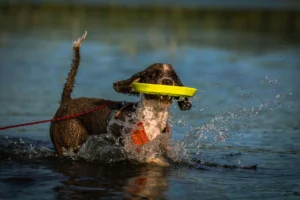
- Portuguese Water Dog Advanced Training Guide
- Understanding the PWD Learning Style
- Water Work: Tapping Into Natural Instincts
- Building Water Confidence
- Advanced Water Retrieval Skills
- Scent Detection Training
- Complex Command Chains and Task Training
- Competitive Sports for Portuguese Water Dogs
- Managing the PWD's Independent Thinking
- Troubleshooting Advanced Training Plateaus
- Building Duration and Distraction Tolerance
- Conclusion: Advanced Training as Lifestyle
- Related Articles
- Frequently Asked Questions
- At what age can I start advanced training with my Portuguese Water Dog?
- How much training can a Portuguese Water Dog handle daily?
- Do Portuguese Water Dogs really need advanced training or is basic obedience enough?
- Can older Portuguese Water Dogs learn advanced skills?
- What's the biggest mistake people make in advanced Portuguese Water Dog training?
Portuguese Water Dog Advanced Training: Unlocking Your PWD’s Full Potential
Your Portuguese Water Dog just sailed through the Canine Good Citizen test, nails the “stay” command from three rooms away, and looks at you with those intelligent eyes that say, “What’s next?” If you’ve reached this point, you already know what seasoned PWD owners discover quickly: these curly-coated athletes weren’t bred to simply sit pretty. They spent centuries diving into icy Atlantic waters, herding fish into nets, and retrieving lost tackle for Portuguese fishermen. That working heritage doesn’t just disappear because they’re now sleeping on your couch.
Advanced training for this breed isn’t just about showing off at the dog park. It’s about fulfilling the mental and physical requirements hardwired into their DNA. A bored Portuguese Water Dog becomes a destructive one, and basic obedience only scratches the surface of what these dogs can accomplish.
Understanding the PWD Learning Style
Portuguese Water Dogs learn differently than many other breeds, and recognizing these patterns makes advanced training considerably smoother. They’re problem-solvers who get bored with endless repetition. Run through the same recall drill twenty times, and you’ll notice their enthusiasm dropping around attempt seven. Their ancestors needed to make independent decisions on fishing boats, so they’re not naturally inclined toward mindless compliance.
This breed thrives on variety and challenge. A typical training session should last 10-15 minutes maximum, but you might do three or four sessions throughout the day. Watch for the telltale signs of engagement: forward-leaning posture, ears perked, eyes locked on you. The moment you see them glancing away or sniffing the ground without purpose, wrap up the session on a high note.
They’re also incredibly food-motivated, but not in the desperate way some breeds are. Quality matters to them. Swap your standard training treats for tiny cubes of real chicken, freeze-dried liver, or string cheese, and you’ll see their focus intensify. Save the absolute best rewards for the hardest behaviors you’re shaping.
Water Work: Tapping Into Natural Instincts
If you’re not incorporating water work into your advanced training, you’re missing the entire point of owning a Portuguese Water Dog. These dogs are called “Porties” for short, but their full name tells you exactly what they were born to do. Starting water work requires patience and the right progression, especially if your dog didn’t begin as a puppy.
Building Water Confidence
Even with their genetic predisposition, not every PWD jumps into water fearlessly. Start in shallow water where they can stand comfortably—a calm lake edge, a kiddie pool, or a gently sloping beach. Wade in yourself and make it a game. Toss a favorite toy just a foot into the water, then two feet, gradually increasing distance over several sessions.
Once they’re swimming confidently, introduce retrieval from water. Begin with bumpers or floating toys before progressing to items that require diving. The real breakthrough happens when you see them duck their head under voluntarily, searching for a toy you’ve dropped. That’s the fishing dog heritage clicking into place.
Advanced Water Retrieval Skills
After mastering basic water retrieves, teach directional commands in water. Stand at the shore and send your dog left or right to retrieve items they haven’t seen you throw. This requires them to trust your guidance even when their instincts might suggest a different path. Start with obvious placement—they can see the bumper even if they didn’t watch the throw—then progress to true blind retrieves.
Train them to retrieve multiple items in sequence. Throw three bumpers into the water in different locations, then direct them to retrieve each one specifically rather than grabbing whichever is closest. This level of control and communication represents genuine advanced work that would make their fisherman ancestors proud.
Scent Detection Training
Portuguese Water Dogs have excellent noses, though they’re often overshadowed by traditional scent hounds. Their intelligence combined with their drive to work makes them outstanding candidates for nose work, whether you’re interested in competitive scent detection or just want to tire them out mentally.
Start with basic scent discrimination using essential oils. Birch, anise, and clove are the standard competition scents, but you can begin with just one. Place a cotton swab with a drop of oil in a small tin, hide it in an easy location, and reward heavily when your dog finds it. The beautiful thing about nose work is that it exhausts them mentally far faster than physical exercise alone.
Progress to container searches, where your dog must identify which of several identical boxes contains the target scent. Then move to interior searches in rooms with furniture, exterior searches in outdoor spaces, and vehicle searches around cars. Each environment presents different challenges with air currents and scent pooling. A PWD who’s regularly worked on scent detection becomes calmer and more focused in all aspects of life because they’re using their brain the way nature intended.
Complex Command Chains and Task Training
Once your dog reliably performs individual advanced commands, chain them together into sequences. This isn’t just obedience theater—it teaches them to remember multiple steps and complete complex tasks without constant handler input.
Start simple: “Go to your bed, lie down, and stay until I release you” combines three separate behaviors into one task. Gradually increase complexity. Teach them to retrieve specific items by name (the morning paper, your slippers, their leash), then combine these with other commands. “Get your leash and bring it to the door” requires object discrimination, retrieval, and spatial awareness.
Portuguese Water Dogs excel at assistance-style tasks. Train them to open and close doors using a rope attached to the handle, turn lights on and off with paw targets, or fetch items from different rooms. These tasks aren’t just party tricks—they provide the mental stimulation that prevents destructive behaviors and anxiety. A PWD who’s mentally tired from task work is a content, well-behaved companion.
Competitive Sports for Portuguese Water Dogs
These versatile athletes can compete successfully in nearly every dog sport, but some play to their natural strengths better than others. Choosing the right sport depends on your goals and your dog’s individual personality.
- Dock Diving: Pure PWD joy. Their powerful hindquarters and water obsession make them natural competitors. Many Porties reach distances of 20+ feet with proper training.
- Agility: They’re quick learners and athletic enough to excel, though their independent streak means you’ll need strong communication and motivation.
- Rally Obedience: The variety of exercises suits their “I get bored easily” personality better than traditional obedience.
- Barn Hunt: Combines scent work, problem-solving, and physical activity. Many PWDs love the challenge of finding rats (safely enclosed in tubes) hidden in straw bales.
- Water Trials: Specifically designed for water breeds, these trials test retrieval, courier work, and teamwork in aquatic environments.
Competition provides structure for your advanced training and connects you with other owners who understand the breed. The socialization aspect matters too—PWDs can become overly bonded to their families without regular exposure to new situations.
Managing the PWD’s Independent Thinking
Here’s the challenge nobody mentions until you’re deep into training: Portuguese Water Dogs are smart enough to decide when your commands make sense and when they don’t. They’re not German Shepherds who live to obey. They’re working partners who expect collaboration.
This manifests in interesting ways during advanced training. Your dog might perform a complex sequence perfectly five times, then suddenly refuse or modify it. Before assuming defiance, consider whether they’ve identified a more efficient method or whether something in the environment changed that they’re reacting to. Sometimes they’re actually right.
That said, you still need reliable responses, especially for safety commands. Build these through motivation rather than compulsion. Make the correct choice so rewarding that they’ll choose to comply even when they’re not entirely sure why. Use real-life rewards too—not just treats. The release to go swim can be a reward for excellent recall practice. Access to their favorite playmate can reward walking calmly through the parking lot.
Create a command hierarchy in your own mind. Some commands are non-negotiable safety issues (emergency recall, drop it, leave it). Others can have flexibility. If you ask for a sit and they offer a down instead because the ground is more comfortable, does it actually matter? Pick your battles, and you’ll maintain the relationship quality that makes advanced training possible.
Troubleshooting Advanced Training Plateaus
Even with this intelligent breed, you’ll hit walls where progress stalls. Your dog performed a behavior beautifully for two weeks, and suddenly they’re acting like they’ve never heard the command. This isn’t stubbornness—it’s almost always a training or communication issue.
The most common culprit is moving too fast. Portuguese Water Dogs learn initial concepts quickly, which fools handlers into adding difficulty before the behavior is truly solid. If your dog reliably retrieves specific items in your living room but fails in the backyard, you’ve skipped important generalization steps. Go back two levels, proof the behavior thoroughly, then advance more slowly.
Sometimes the issue is reward placement. If you’re practicing complex distance work but only rewarding when they return to you, you’re accidentally punishing the behavior you want (working at a distance). Learn to throw treats to them at a distance, or use a helper to deliver rewards where the behavior occurs.
Physical issues derail training too. PWDs are prone to hip dysplasia and eye problems. If your previously enthusiastic dog suddenly resists jumping into the car or seems hesitant about agility equipment, schedule a vet check before assuming a training problem. Pain changes everything.
Building Duration and Distraction Tolerance
Advanced commands mean nothing if your dog can only perform them in your quiet living room. Real-world reliability requires systematic exposure to the three Ds: duration, distance, and distraction. But here’s the critical part—you can only increase one at a time.
If you’re working on duration, keep distance short and distractions minimal. Teaching a five-minute down-stay? Start in your boring hallway, standing right next to them. Once they’ll hold that for five minutes, add distance but drop the duration back to 30 seconds. Build it back up. Then add distraction but reduce both distance and duration initially.
For Portuguese Water Dogs specifically, water often represents the ultimate distraction. A dog who’s rock-solid off-leash at the park might completely ignore you near a lake. Train specifically for this. Practice recalls when they’re wading, then swimming, then engaged in water play with other dogs. The recall that works when they’re fetching a ball from water represents genuinely advanced training.
Create a distraction hierarchy. What’s mildly interesting to your dog? What’s moderately tempting? What’s nearly irresistible? Train at each level until commands are fluent before moving to the next. For most PWDs, the hierarchy looks something like: unusual sounds, new people, other dogs, small animals, and finally, water. Your training plan should address each systematically.
Conclusion: Advanced Training as Lifestyle
Training a Portuguese Water Dog to their full potential isn’t a destination—it’s an ongoing partnership. These dogs don’t graduate from learning. At eight years old, they’re still capable of mastering new complex tasks and still require the mental stimulation that advanced work provides. The senior PWD who spent years learning and working stays sharper and healthier than the one who stopped at basic obedience.
The investment pays dividends beyond a well-trained dog. You’ll develop timing, observation skills, and communication abilities that enhance every aspect of pet ownership. You’ll join a community of handlers who appreciate what these curly athletes can do. Most importantly, you’ll have a dog who’s truly fulfilled, using the intelligence and drive that centuries of selective breeding created.
Start with one area that excites you—whether that’s water work, scent detection, or complex task training—and commit to short, consistent sessions. Your Portuguese Water Dog is waiting for you to show them what’s next, and trust me, they’re ready for the challenge.
Related Articles
- Advanced Training Strategies for Different Dog Breeds
- Advanced Training for the Catahoula Leopard Dog
- Advanced Training for Small Dog Breeds That Works
- Australian Cattle Dog Advanced Training Guide
- Advanced Training for Great Pyrenees: Master Their Independence
Frequently Asked Questions
At what age can I start advanced training with my Portuguese Water Dog?
You can begin foundation work for advanced training as early as 4-5 months old, focusing on engagement, focus, and basic concepts. Serious advanced training typically starts around 12-18 months once growth plates have closed and the dog has matured physically. However, mentally challenging work like scent detection can begin earlier since it doesn’t stress developing joints.
How much training can a Portuguese Water Dog handle daily?
Most PWDs do best with three to four short sessions of 10-15 minutes each rather than one long session. They’re mentally intense learners who fatigue cognitively before they tire physically. Watch for signs of mental exhaustion like yawning, sniffing, or decreased enthusiasm, and end sessions before you see these signs to keep training fun and productive.
Do Portuguese Water Dogs really need advanced training or is basic obedience enough?
While basic obedience keeps them safe and manageable, Portuguese Water Dogs genuinely need ongoing mental challenges to thrive. Without advanced training or complex tasks, many develop anxiety, destructive behaviors, or excessive energy despite adequate physical exercise. Their working heritage means they’re happiest when their intelligence is consistently engaged.
Can older Portuguese Water Dogs learn advanced skills?
Absolutely. PWDs remain mentally sharp and trainable well into their senior years, often learning new complex tasks at 8-10 years old. You may need to adapt physical requirements for aging joints, but cognitive work actually helps maintain mental acuity. Older dogs often have better focus and impulse control than younger ones, which can make certain advanced training easier.
What’s the biggest mistake people make in advanced Portuguese Water Dog training?
The most common error is treating them like purely obedient breeds and expecting robotic compliance. PWDs are thinking partners who need to understand the “why” behind commands. Handlers who rely heavily on compulsion or repetitive drilling without variety usually end up with resistant, shut-down dogs. Success comes from making training a collaborative game that respects their intelligence.