Advanced Training for the Miniature Pinscher
- Advanced Training for the Miniature Pinscher
- Understanding the Min Pin Mind Before You Train
- Complex Trick Sequences That Showcase Intelligence
- Building a Trick Routine
- Advanced Obedience: Distance and Distraction Work
- The Emergency Recall
- Nose Work and Scent Detection Games
- Creating a Scent Work Course at Home
- Agility Training for Small But Mighty Athletes
- Problem-Solving Games and Puzzle Work
- Teaching "Figure It Out"
- Training Through Life Stages and Physical Changes
- Maintaining Motivation and Preventing Burnout
- Conclusion: Building a Partnership Through Challenge
- Related Articles
- Frequently Asked Questions
- At what age can I start advanced training with my miniature pinscher?
- How long should advanced training sessions last for a miniature pinscher?
- Why does my miniature pinscher perform tricks perfectly at home but ignore me in public?
- Can miniature pinschers really compete in agility or nose work with larger breeds?
- What should I do if my miniature pinscher seems to plateau in training?
Advanced Training for the Miniature Pinscher
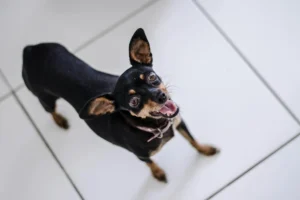
Your miniature pinscher just nailed a perfect sit-stay across the living room while the doorbell rang, the neighbor’s cat walked past the window, and someone opened a bag of treats in the kitchen. You’re feeling pretty proud. But now what? That big brain and boundless energy need more than basic obedience. Min Pins aren’t content to simply sit and stay—they need jobs, challenges, and opportunities to show off that surprising intelligence packed into their ten-pound frames.
Advanced training isn’t just about teaching flashy tricks (though we’ll cover plenty of those). It’s about creating a mental workout routine that matches your Min Pin’s physical energy. These dogs were bred to hunt vermin independently, which means they’re hardwired to think, problem-solve, and make quick decisions. When you channel that drive into structured training, you’ll prevent the destructive behaviors that emerge when a clever dog gets bored.
Understanding the Min Pin Mind Before You Train
Here’s what most training guides won’t tell you: miniature pinschers have a reputation for being stubborn, but that’s not quite accurate. They’re selective. Show them a training exercise that makes no sense, and they’ll ignore you completely. Present a challenge that engages their prey drive or problem-solving instincts, and they’ll work with laser focus for twenty minutes straight.
The key difference between basic and advanced training lies in complexity and duration. While a beginner dog might struggle to hold attention for five minutes, your Min Pin should be ready for 15-20 minute sessions by now. Watch for the signs that indicate readiness: can they hold a stay for 30 seconds with moderate distractions? Do they understand marker training (clicker or verbal “yes”)? Can they chain two commands together, like “sit” then “shake”?
Their attention span operates differently than larger, calmer breeds. You’ll get better results with three 15-minute sessions throughout the day than one 45-minute marathon. Their minds work fast—sometimes they’ll nail a new behavior on the second try, then seemingly forget it on the third. That’s not defiance; it’s their brain processing information in quick bursts rather than steady repetition.
Complex Trick Sequences That Showcase Intelligence
Forget simple “shake” commands. Your miniature pinscher can learn elaborate sequences that would impress any audience. Start with behavior chains—linking three or more commands in a specific order. A solid starter sequence: “spin, bow, back up, play dead.” Each behavior they already know becomes a building block.
The secret to teaching sequences lies in backward chaining. Teach the final behavior in the sequence first, then add the second-to-last, working backward until you’ve built the entire chain. Why? Because the reward always comes at the end, making each previous step a predictor of that payoff. Your Min Pin learns that completing the whole sequence, in order, triggers the jackpot.
Building a Trick Routine
Here’s a practical five-trick sequence that takes advantage of the Min Pin’s natural movements and showmanship:
- Weave through legs: They’re small enough to zip between your legs as you walk forward—start with you standing still, lure them through with treats, then add steps
- Figure-8 around objects: Use two cones or bottles, reward them for circling both in a specific pattern
- Jump through arms: Create a hoop with your arms low to the ground, gradually raise it as they gain confidence
- Take a bow: Capture the natural stretch they do after naps, add your cue word
- Find it: End with a nose work element where they locate a hidden treat you’ve planted beforehand
Practice each element separately for a week, then start linking them with a consistent verbal cue like “showtime” or “let’s go.” Within three weeks, most Min Pins can perform the entire sequence on that single opening command.
Advanced Obedience: Distance and Distraction Work
Real-world obedience means your dog responds when they’re 30 feet away, when squirrels are present, and when they’re absolutely certain something more interesting exists just out of sight. This is where miniature pinschers often fail—not because they can’t learn, but because their prey drive screams louder than your recall command.
Start distance training in a long hallway or fenced yard. Put your Min Pin in a stay, walk 10 feet away, then call them. Easy, right? Now add one second of delay before you release them. Then two seconds. Build up to a 15-second stay with you 20 feet away. The goal isn’t just distance—it’s teaching impulse control at a distance.
Distraction training requires creativity. Don’t just practice in your quiet living room. Set up scenarios: have a family member walk past with a squeaky toy while your dog holds a stay. Roll a ball across their line of sight. Place their food bowl down while they wait for release. Each successful resistance to distraction should earn a reward that’s better than the distraction itself. If you’re asking them to ignore their favorite squeaky ball, the reward better be real chicken, not dry kibble.
The Emergency Recall
Every dog needs a separate, nuclear-level recall command reserved exclusively for genuine emergencies. Choose a word you’ll never use casually—many trainers use “NOW” or a sharp whistle pattern. Here’s how to build it:
Never, ever practice this command without following through with an extraordinary reward. We’re talking a handful of hot dog pieces, an entire cheese stick, or their absolute favorite toy plus a two-minute play session. Use this command maybe twice a week during training, and only when you’re 100% certain they’ll respond. You’re building a Pavlovian response so strong that even in the face of a running rabbit, that word means “abandon everything and sprint to your person.”
After six months of consistent training, test it once in a moderate distraction scenario. If they respond instantly, you’ve succeeded. If they hesitate, you need another month of high-value practice before trusting it in a real emergency.
Nose Work and Scent Detection Games
That powerful prey drive that makes recall training challenging? Channel it into scent work. Miniature pinschers were bred to hunt rats and small game, which means they’ve got better noses than you might expect from a dog often dismissed as a “toy breed.” Scent training taps into hardwired instincts, making it some of the most satisfying work they’ll ever do.
Begin with simple food searches. Let them watch you hide a treat under one of three overturned cups. Say “find it” and let them search. Easy. Now hide it while they’re in another room. Then hide multiple treats around a single room. Within a week, you can progress to hiding treats in increasingly difficult locations—inside a rolled towel, under furniture legs, in pockets of hanging coats.
The next level involves scent discrimination. This means teaching them to identify and alert to a specific smell while ignoring others. Start with essential oils—birch, anise, and clove are standard in competitive nose work. Place a cotton swab with one drop of birch oil in a small tin, hide it among several empty tins, and reward them only when they indicate the scented tin. Most Min Pins can learn basic scent discrimination within two to three weeks of daily practice.
Creating a Scent Work Course at Home
You don’t need fancy equipment. Here’s what works in a typical house:
- Small cardboard boxes of varying sizes stacked or scattered in a room
- A bookshelf where tins can be hidden at different heights
- A pile of blankets or towels where scent tins hide in folds
- Chairs and tables creating an obstacle course they navigate while searching
- Outdoor options: flower pots, deck stairs, fence posts, garden stones
Rotate your search areas every few days. The goal is teaching them the searching behavior itself, not just memorizing where you usually hide things. Watch for their natural alert behavior—some Min Pins will paw at the source, others will freeze and stare, some will sit. Whatever they naturally do, mark it and reward it consistently.
Agility Training for Small But Mighty Athletes
Your miniature pinscher might weigh less than a gallon of milk, but they’ve got the athletic ability of dogs three times their size. Agility training provides both physical exercise and mental challenge, requiring them to learn equipment, follow directional cues, and execute a course at speed—all while staying focused on you.
Start with basic equipment introduction at home. You don’t need a full agility course; a broomstick balanced on books becomes a jump, a cardboard box tunnel works for introductory tunnel training, and a wooden board on the ground teaches contact equipment basics. The key is making each obstacle a positive experience before worrying about speed or precision.
Jump height matters significantly for Min Pins. In competitive agility, dogs their size jump 8 inches—about the height of a brick. Never push them to jump higher than their shoulder height during training. Their prey drive might convince them to attempt ridiculous leaps, but their delicate bone structure can’t handle the impact of repeated high jumping. Keep it safe, keep it low.
Weave poles are where miniature pinschers often excel. Their size and agility let them zip through poles faster than many larger dogs. Start with channel weaves (poles spaced wide apart in two rows) or stick weaves (using just two poles). Once they understand the pattern—enter with your left shoulder, weave through—you can tighten the spacing over several months until they’re working with competition-standard 24-inch spacing.
Problem-Solving Games and Puzzle Work
Intelligence without outlet becomes destructive behavior. Those Min Pins who shred couch cushions or dig through trash aren’t being spiteful—they’re desperately bored. Problem-solving games provide mental exhaustion that rivals physical exercise. A twenty-minute puzzle session can tire your dog as effectively as a forty-minute walk.
Commercial puzzle toys range from beginner level (flip a flap to find treats) to expert level (slide multiple pieces in sequence to unlock compartments). Start simple and watch how quickly they solve it. If they crack a “level 2” puzzle in under three minutes, skip to level 4. Don’t waste time on challenges that bore them.
DIY puzzles often work better because you can customize difficulty. A muffin tin with treats in some cups and tennis balls covering all cups creates a basic puzzle. Escalate to treats inside knotted towels, inside boxes within boxes, or frozen inside ice blocks. The physical manipulation required to access rewards engages both brain and body.
Teaching “Figure It Out”
The most valuable skill you can teach an advanced dog is persistence when problem-solving. Instead of immediately helping when they’re stuck, teach them to keep trying. Place a treat under an overturned bowl—one they can easily flip. When they succeed, mark and reward. Next session, use a heavier bowl. They’ll paw at it, maybe nose it, possibly give up and look at you. Don’t help. Wait. The moment they re-engage with the problem, mark that behavior with “yes!” even if they haven’t solved it yet. You’re rewarding the attempt, the persistence.
Over multiple sessions, they learn that problem-solving itself is rewarding, not just the treat at the end. This mindset shift transforms training. Instead of a dog who quits when something’s difficult, you’ve got a dog who problem-solves independently—exactly what the breed was designed to do.
Training Through Life Stages and Physical Changes
That eager two-year-old Min Pin won’t stay two forever. Advanced training needs to adapt as your dog ages. Senior dogs (typically 10+ for this breed) still need mental stimulation, but their bodies can’t handle the same physical demands. Shift from agility jumping to more scent work. Replace fast-paced sequences with precision work that rewards accuracy over speed.
Joint health becomes paramount. Even if your twelve-year-old miniature pinscher still acts like a puppy, their knees and hips are aging. Avoid repetitive jumping or tight turns. Focus on brain games, gentle trick work, and modified obedience. Teaching them to target specific objects with their nose, differentiate between named toys, or follow complex verbal instructions provides challenge without physical stress.
Puppies under one year shouldn’t do serious agility or repetitive jumping either—their growth plates haven’t closed. But you can absolutely teach the foundations: body awareness, directional cues, impulse control, and basic trick vocabulary. Think of puppy training as building the database they’ll pull from once their body is ready for advanced work.
Maintaining Motivation and Preventing Burnout
Even the most enthusiastic miniature pinscher can burn out on training if you push too hard or make it too repetitive. Watch for signs: slower response times, looking away from you during sessions, less enthusiasm for their reward, or outright refusal to engage. These aren’t stubbornness—they’re communication that something needs to change.
Vary your reward system constantly. If you’ve used chicken for three weeks straight, switch to cheese. Or tug toys. Or access to their favorite sniffing spot in the yard. The reward needs to stay valuable, which means it needs to stay somewhat unpredictable. Some trainers use a “jackpot” system—nine times out of ten, the reward is a single treat, but that tenth time, they get a whole handful plus enthusiastic praise. The unpredictability maintains high motivation.
End every session on success, even if that means dramatically simplifying your request. If you’ve been working on a difficult weave-pole sequence for fifteen minutes and they’re clearly frustrated, ask for a simple behavior they’ve known for years—”sit” or “touch”—reward enthusiastically, and end the session. They should finish training feeling successful, not defeated.
Take breaks. If you’ve been training five days a week for two months, take a whole week off. Play, go for sniff walks, enjoy each other’s company without any formal training. The break refreshes their enthusiasm and often solidifies learning—behaviors that seemed shaky before a break often come back stronger after a few days off.
Conclusion: Building a Partnership Through Challenge
Advanced training transforms your relationship with your miniature pinscher from owner-pet to genuine partnership. You’re no longer just the person who feeds them and opens doors—you’re their teammate in problem-solving, their coach in skill-building, their partner in achieving goals together. That shift matters more than any specific trick they learn.
The techniques covered here—complex sequences, distance obedience, scent work, agility, and problem-solving—give you a roadmap, not a rigid prescription. Your individual Min Pin might excel at nose work but find agility boring, or vice versa. Pay attention to what lights them up and lean into those activities. Training should be fun for both of you.
Start with one new skill this week. Maybe it’s teaching them to find a scented tin hidden in your living room, or building a simple three-trick sequence, or working on a 30-second stay with you across the room. Pick something achievable, make it fun, and watch your clever miniature pinscher surprise you with how quickly they catch on. You’ve got a brilliant dog—now you’ve got the tools to prove it.
Related Articles
- Advanced Training for Your Miniature Schnauzer
- Advanced Training for Great Pyrenees: Master Their Independence
- Anatolian Shepherd Advanced Training: A Complete Guide
- Advanced Training for Great Danes: Building a Gentle Giant
- Advanced Training Strategies for Different Dog Breeds
Frequently Asked Questions
At what age can I start advanced training with my miniature pinscher?
You can introduce foundational advanced concepts as early as six months, but true advanced work is best started around 12-18 months when your Min Pin has mastered basic obedience and their attention span has matured. Their growth plates should be fully closed before attempting repetitive jumping or intense agility work. For senior dogs over eight years old, advanced training is still beneficial but should emphasize mental challenges over physically demanding activities.
How long should advanced training sessions last for a miniature pinscher?
Most Min Pins maintain peak focus for 10-20 minutes per session, with three sessions daily being ideal for serious training. Shorter, frequent sessions work better than long marathon sessions because of their quick-processing minds. Watch for signs of mental fatigue like yawning, looking away, or slower response times—these indicate it’s time to end on a high note rather than pushing through.
Why does my miniature pinscher perform tricks perfectly at home but ignore me in public?
This is a classic generalization problem—your dog hasn’t learned that commands apply in all environments, not just the living room where you practiced. You need to deliberately train in multiple locations with gradually increasing distractions. Start in a quiet backyard, then a friend’s house, then a quiet park corner, working up to busy environments over weeks. Each new location requires re-teaching the behavior with high-value rewards until the command generalizes across all settings.
Can miniature pinschers really compete in agility or nose work with larger breeds?
Absolutely. In competitive scent work and nose work, size doesn’t determine success—scenting ability and focus do, and Min Pins excel at both. For agility, they compete in height divisions against similarly-sized dogs, and their speed and intelligence make them formidable competitors. Many miniature pinschers have earned titles in AKC Scent Work, Barn Hunt, and agility competitions. Their small size is actually an advantage in tight weave poles and quick directional changes.
What should I do if my miniature pinscher seems to plateau in training?
Plateaus are normal and usually signal needed changes in your approach. First, verify they truly understand the current skill before advancing—sometimes what looks like a plateau is actually a gap in foundation understanding. Try switching rewards, changing training locations, or taking a week-long break to refresh motivation. If a specific skill isn’t clicking after two weeks, table it temporarily and work on something else—you can always circle back after they’ve had success building confidence in other areas.